MTH30: Precaulculus Mathematics
Table of Contents
Textbook
Our textbook is Precalculus by Jay Abramson, OpenStax
Zoom
Thursdays we meet online via zoom.
- Zoom Link: Nikos Apostolakis MTH 30 Class
- Meeting ID: 839 5829 9375
- Passcode: 319493
Departmental Webpages
Exams and Quizes
- Midterm Exam The answers: Solutions for the midterm
- Third Quiz The answers: Solutions for third quiz
- Fourth Quiz The answers: Solutions for fourth quiz
- Fifth Quiz The answers: Solutions for fifth quiz
- Sixth Quiz The answers: Solutions for sixth quiz
Trig notes
- The definitions and basic identities of trigonometric functions: Trigonometric identites
- Notes on Trigonometric Equations: Trigonometric Equations
Graphs of Trigonometric Functions
Sine
For an arc \(\theta\) in the unit circle starting at the point \((0,1)\), \(\sin \theta\) is the $y$-coordinate of its end point. The following animation shows the graph traced as the endpoint traverses the unit circle:
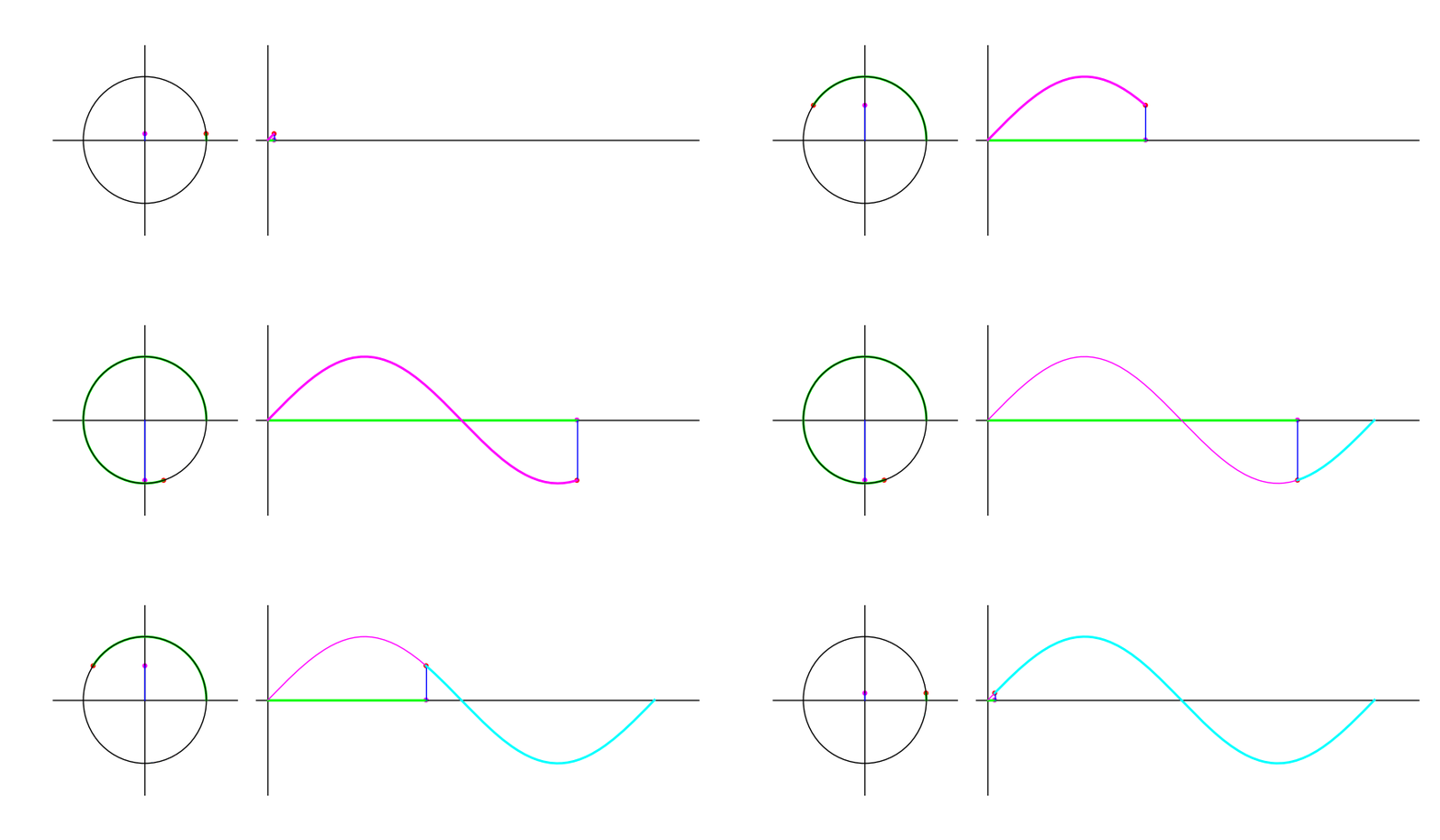
Figure 1: The sine of a point moving in a circle
Cosine
\(\cos \theta\) is the $x$-coordinate of the end point. The following animation shows the graph traced as the endpoint traverses the unit circle:
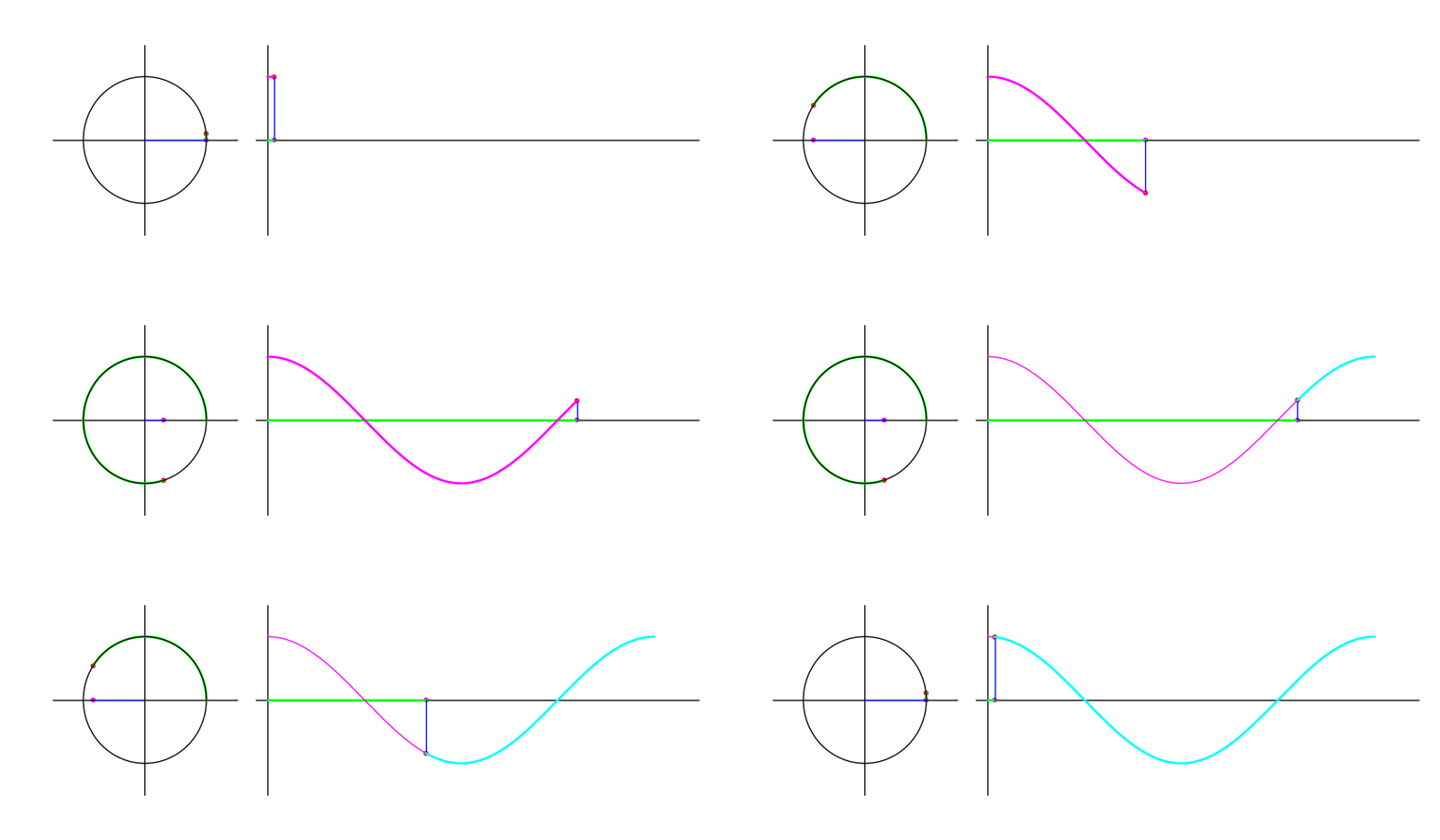
Figure 2: The cosine of a point moving in a circle
Tangent
\(\tan \theta\) is the signed distance of interscetion of the radius through the endpoint and the line tangent to the circle at the point \((0,1)\). The following animation shows the graph traced as the endpoint traverses the unit circle:
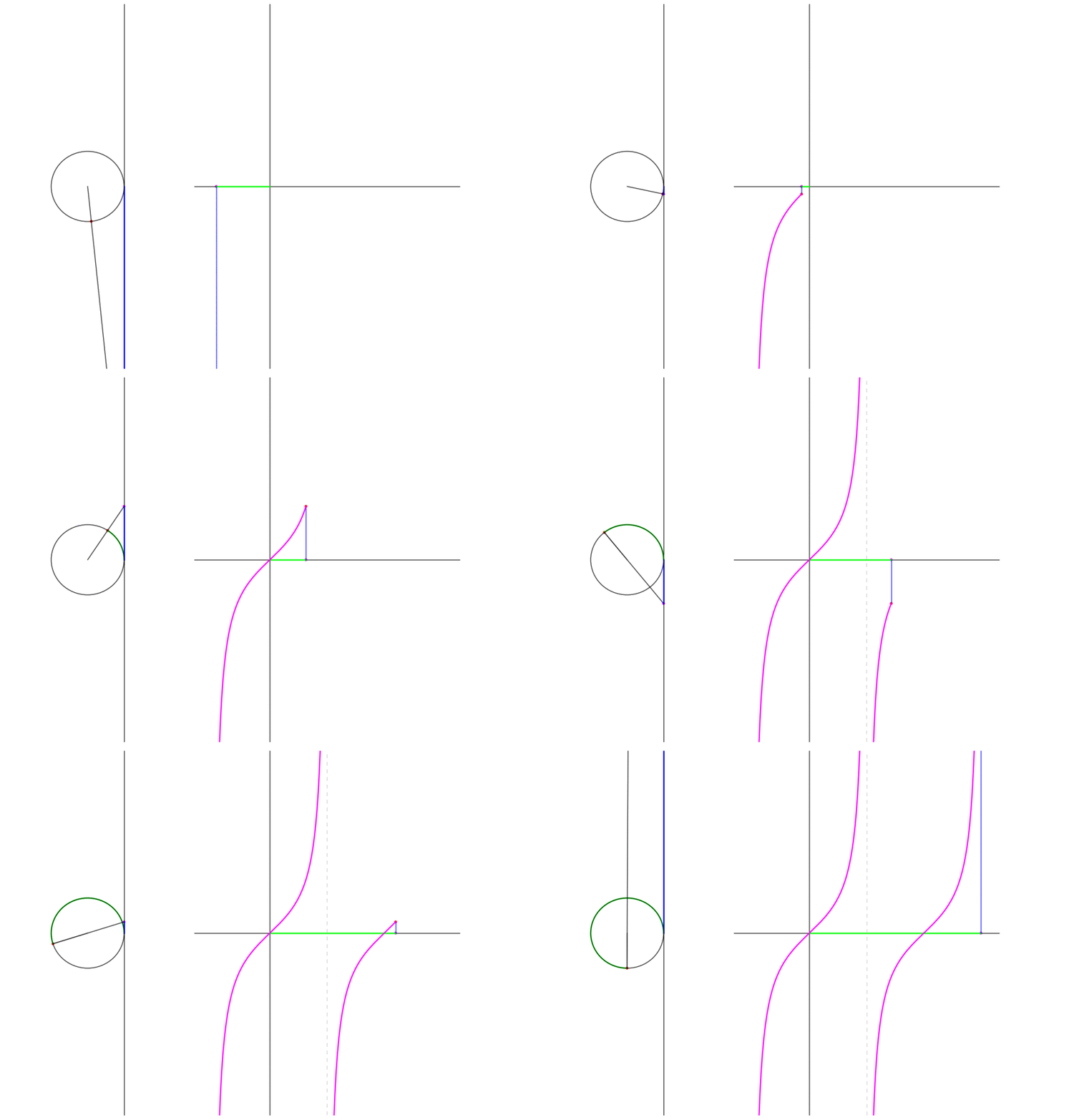
Figure 3: The tangent of a point moving in a circle
Notice that at \(\theta = \dfrac{\pi}{2}\) the radius is actually parallel to the tangent and therefore \(\tan \dfrac{\pi}{2}\) is undefined. Similarly for \(\theta = \dfrac{3\pi}{2}\). Furthermore we see that as \(\theta \to \dfrac{\pi}{2}^{-}\), \(\tan \theta \to \infty\) while \(\theta \to \dfrac{\pi}{2}^{+}\), \(\tan \theta \to -\infty\).
Secant
\(\sec \theta\) is the signed distance of the origin and interscetion of the radius through the endpoint and the line tangent to the circle at the point \((0,1)\). The following animation shows the graph traced as the endpoint traverses the unit circle:
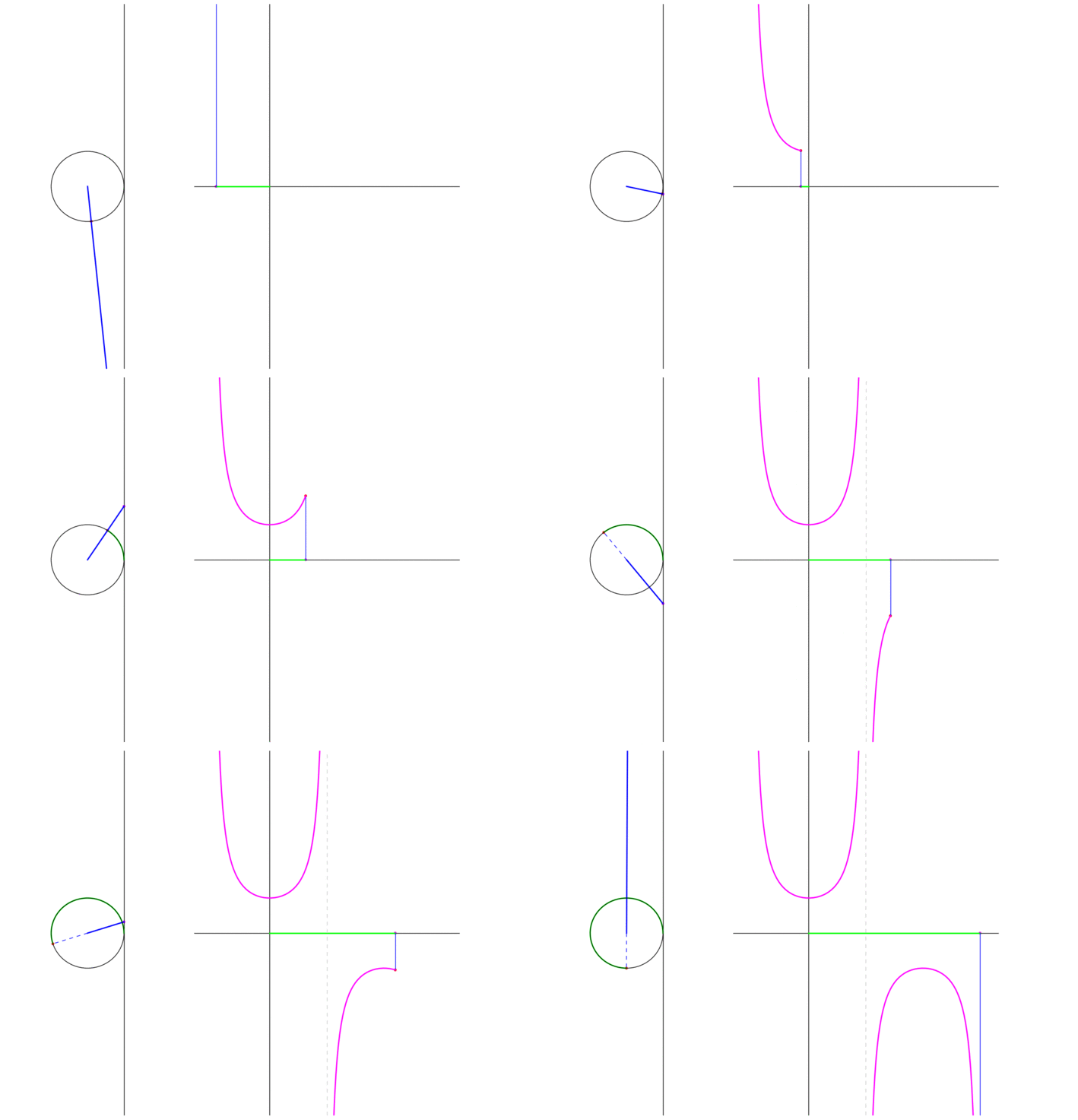
Figure 4: The secant of a point moving in a circle
Notice that at \(\theta = \dfrac{\pi}{2}\) the radius is actually parallel to the tangent and therefore \(\sec \dfrac{\pi}{2}\) is undefined. Similarly for \(\theta = \dfrac{3\pi}{2}\). Furthermore we see that as \(\theta \to \dfrac{\pi}{2}^{-}\), \(\sec \theta \to \infty\) while \(\theta \to \dfrac{\pi}{2}^{+}\), \(\sec \theta \to -\infty\).
Cotangent
\(\cot \theta\) is the signed distance of interscetion of the radius through the endpoint and the line tangent to the circle at the point \((1,0)\). The following animation shows the graph traced as the endpoint traverses the unit circle:
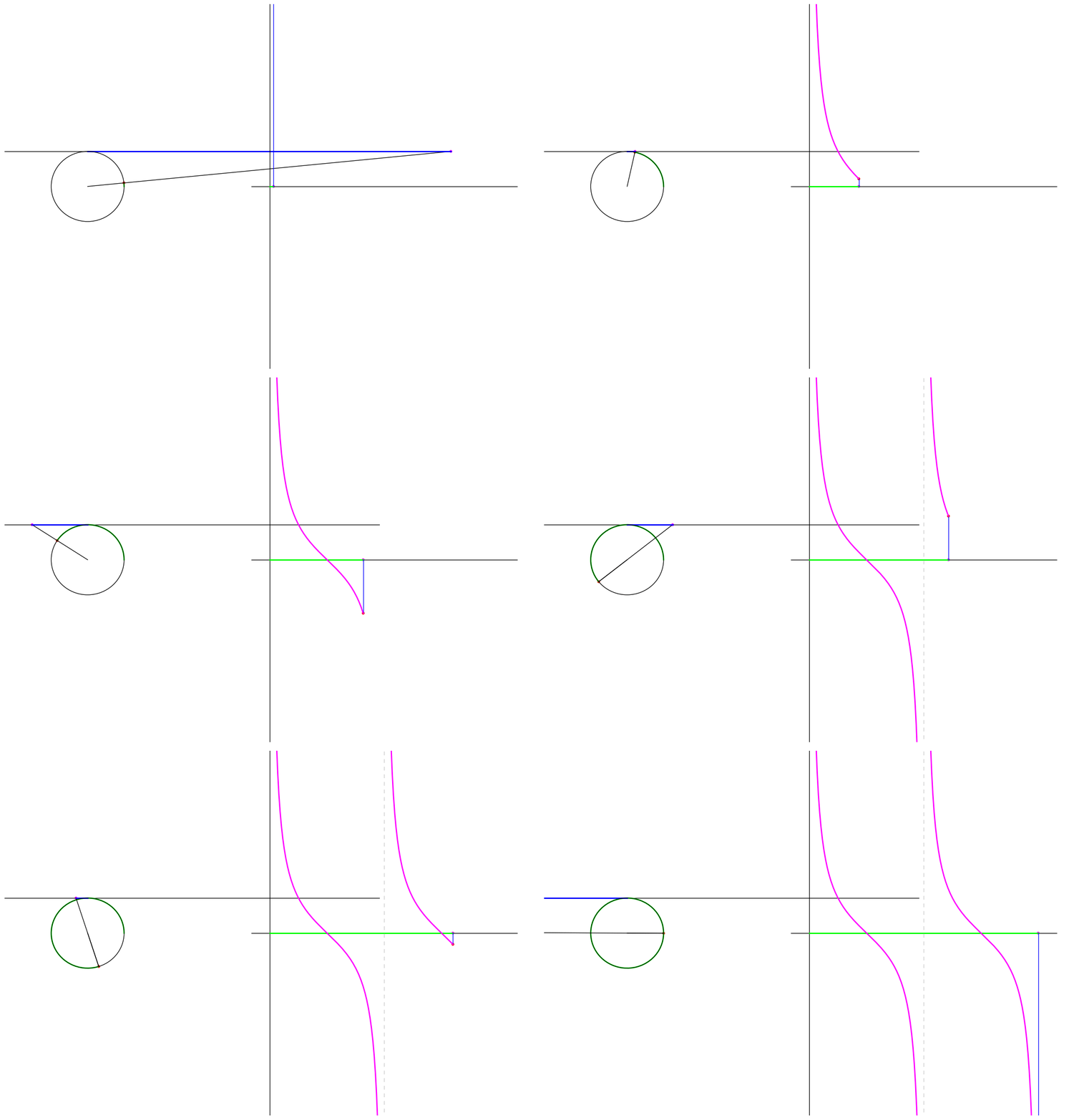
Figure 5: The cotangent of a point moving in a circle
Notice that at \(\theta = 0\) the radius is actually parallel to the tangent line and therefore \(\cot 0\) is undefined. Similarly for \(\theta = \pi\). Furthermore we see that as \(\theta \to \pi^{-}\), \(\cot \theta \to -\infty\) while \(\theta \to \pi^{+}\), \(\cot \theta \to \infty\).